If you are asking yourself, “why does my wife yell at me?”, you are not alone — and you are not necessarily a bad husband. Yelling in a marriage is almost never really about the dishes, the money, or whatever started the argument. It is usually a sign that your wife feels unheard, overwhelmed, or unsafe, and that shouting has become the only way she knows to get through to you.
That does not make yelling okay. Living in a home where you feel attacked wears down trust, closeness, and your own health. The good news is that the yelling cycle can be broken — not by yelling back, and not by walking on eggshells, but by understanding what is driving it and changing how the two of you handle conflict. This guide covers why your wife yells, exactly what to do in the moment, and how to stop it for good.
Quick Answer: Why Does My Wife Yell at Me?
Your wife yells at you because she feels unheard, overwhelmed, or emotionally unsafe, and yelling is the tool she reaches for when calmer words have not worked. The trigger is usually small — a forgotten errand, a dismissive reply — but the real cause is underneath it: built-up resentment, exhaustion, feeling unappreciated, or a communication habit learned years ago. In the moment, stay calm, do not yell back, listen for the need behind the volume, and pause the conversation if it stays loud. Long term, the two of you need a calmer way to talk about needs before they turn into shouting.

7 Reasons Your Wife Yells at You
Yelling is a symptom, not the problem itself. Once you can see which of these reasons fits your marriage, you can address the real issue instead of fighting about the volume.
1. She does not feel heard
This is the most common reason. When your wife has raised the same concern calmly several times and nothing changed, her voice gets louder — not because she enjoys shouting, but because she believes it is the only way to be taken seriously. If calm words were ignored and yelling finally got a reaction, she learned, without meaning to, that yelling works.
2. She is overwhelmed and has no other outlet
Work stress, children, housework, bills, and broken sleep add up. When a person is running on empty, their patience disappears first. A small frustration — a wet towel on the bed, a late reply — can release a whole day of pressure at once. The yelling is not really about the towel. It is about everything she has been carrying alone.
3. She learned it at home
Many people who yell grew up in homes where shouting was normal. If her parents yelled to settle arguments, she may honestly believe that raising her voice is just how couples communicate. She is not trying to hurt you; she is repeating the only conflict style she was taught.
4. Built-up resentment
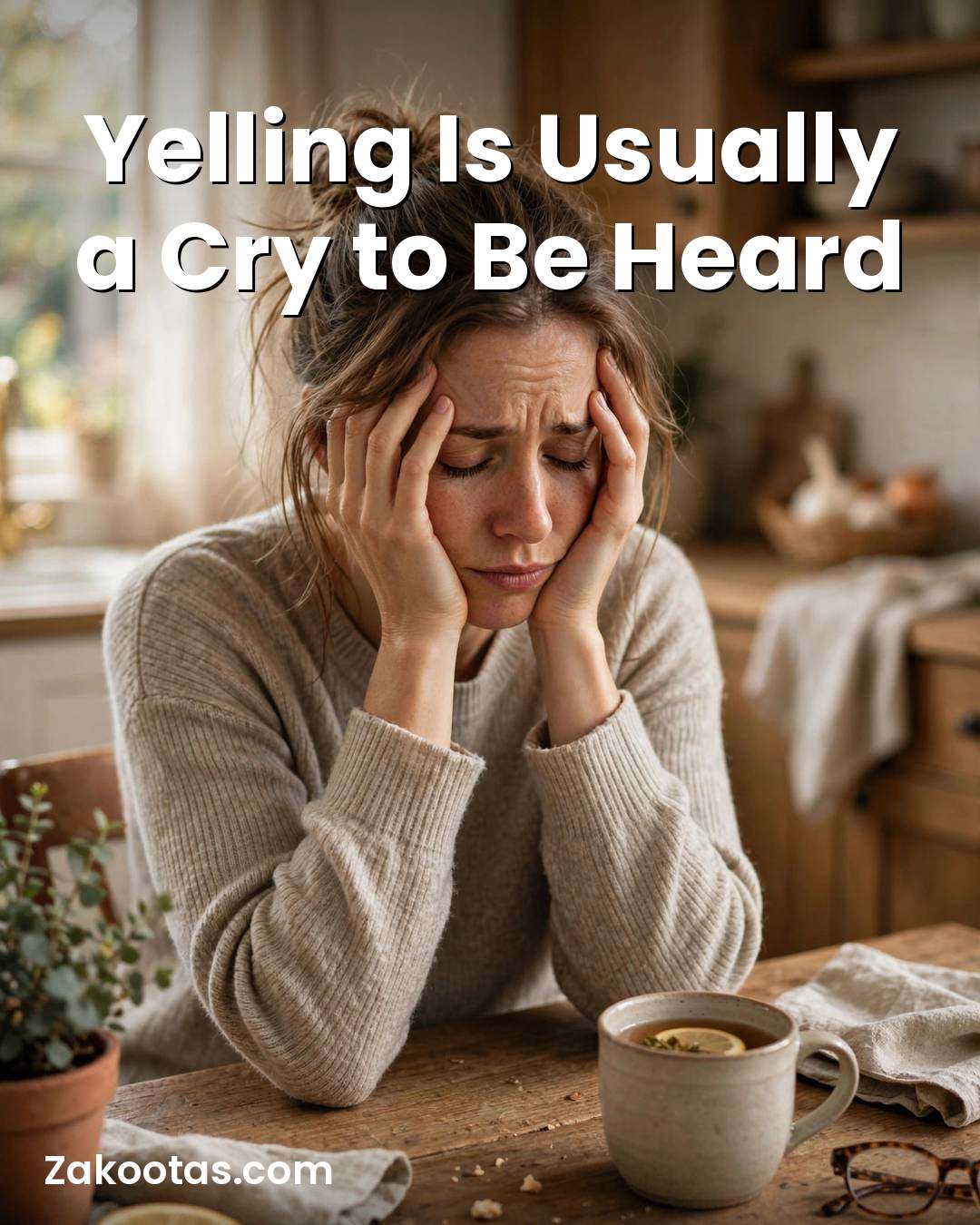
Resentment grows quietly. Every unkept promise, every time she felt dismissed, every argument that ended without a real apology adds a layer. Eventually the smallest thing cracks the surface, and years of frustration come out as shouting. If she yells about something that seems tiny, ask yourself what older, unresolved issue might be underneath it.
5. She feels unappreciated
When someone gives a lot to a marriage — running the home, raising the children, supporting your career — and rarely hears a thank you, frustration builds. Yelling can be a clumsy way of saying, “Notice what I do. Notice me.” Appreciation, given regularly and sincerely, takes a surprising amount of pressure out of a marriage.
6. Stress, exhaustion, or burnout
Chronic stress changes how the brain reacts. A tired, anxious, or burned-out person has a shorter fuse and less ability to stay calm under pressure. Hormonal changes, poor sleep, anxiety, or depression can all make someone quicker to raise their voice. The yelling is still her responsibility to change — but understanding the stress behind it helps you respond with solutions instead of blame.
7. She feels emotionally disconnected from you
When the emotional closeness in a marriage fades — no real conversations, no affection, no time together — small irritations grow louder. Yelling can be an attempt, however unhealthy, to force a reaction and feel connected again. Couples who feel close to each other argue less, and when they do argue, they recover faster.
What to Do When Your Wife Yells at You
These steps are for the ten minutes while it is happening — not for fixing the marriage, but for getting through the moment without making things worse.
1. Pause before you react
Your body will want to answer back in under a second. Do not. Take one slow breath, unclench your jaw, and give yourself three seconds. That tiny pause is the difference between a response and a reaction.
2. Do not yell back
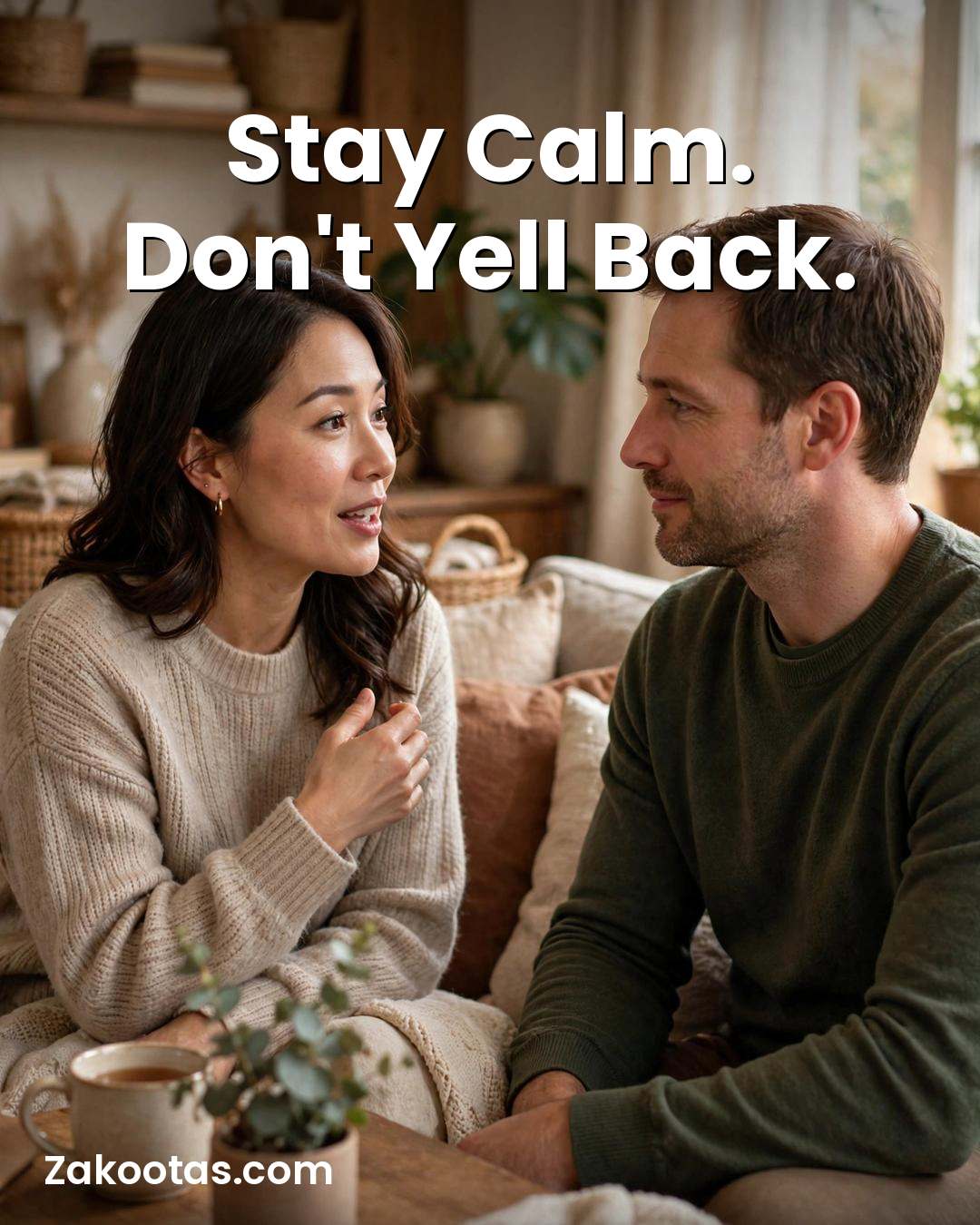
Matching her volume never works. It tells her nervous system that she was right to escalate, and it turns one person’s outburst into a two-person fight. Lower your voice instead of raising it. A calm voice is not weakness — it is the strongest move in the room.
3. Listen for the need behind the volume
Try to hear what she is actually saying underneath the shouting. Is she saying she feels ignored? Overloaded? Disrespected? You do not have to agree with how she said it to acknowledge what she needs. “I can hear you are really frustrated about this” costs nothing and often lowers the temperature immediately.
4. Say one short, calm sentence
Keep it simple: “I want to hear what you are saying, and I cannot do that while we are yelling. Can we take ten minutes and talk about this calmly?” One clear sentence beats a long defence every time.
5. If she keeps yelling, step away — calmly
If the volume does not come down, leave the conversation. This is not punishment and it is not the silent treatment. Say where you are going and when you will be back: “I am going to take a twenty-minute walk so we can both reset. I will come back and we will talk.” Then actually come back. A pause only works if it is followed by a real conversation.
6. Do not try to solve it mid-argument
Nothing gets resolved while either of you is flooded with anger. Wait until you are both calm, then bring the issue back up yourself. That follow-up conversation is where the real fix happens — not in the heat of the shouting.
7. Talk about the pattern when things are calm
Choose a quiet moment — never mid-argument — to name the pattern together. Use “I” statements: “I feel anxious and shut down when voices get loud. I want us to find a calmer way to talk about hard things.” Talk about what each of you needs, not about who is to blame.
Is Yelling Verbal Abuse?
Occasional raised voices during a heated argument are not the same as verbal abuse — but a regular pattern of shouting, insults, and threats is. The difference matters, because the response is different.
| Behaviour | Anger (occasional outburst) | Verbal abuse (destructive pattern) |
|---|---|---|
| How often | Rare, tied to a specific stressful moment | Frequent, and becoming the normal way of communicating |
| Language used | Raised voice about the issue | Name-calling, insults, threats, belittling, humiliation |
| Afterwards | Apology, repair, and a real conversation | Blame, denial, or “you made me do it” |
| How you feel | Upset, but safe | Afraid, worthless, or walking on eggshells at home |
| Best response | Stay calm, validate, set a boundary, talk later | Set a firm boundary and get professional support |
If the yelling comes with insults, threats, or you feel afraid in your own home, that is not a communication problem — it is verbal abuse, and patience alone will not fix it. Learn the warning signs in our guide to an abusive relationship, and talk to a counsellor or a trusted professional. You deserve to feel safe at home.
How to Stop the Yelling Cycle for Good
Stopping the yelling means changing the system that produces it. These five habits, practised together, make shouting less likely and easier to recover from when it happens.
1. Have a weekly check-in
Set aside twenty minutes once a week — same time, no phones — to talk about what is working, what is not, and what each of you needs next week. Small frustrations raised early never grow into shouting. Many couples find this one habit changes everything.
2. Share the load fairly
An unequal share of housework and childcare is one of the biggest drivers of resentment — and resentment is fuel for yelling. Sit down together, list everything that keeps the household running, and divide it honestly. Then actually do your share without being asked.
3. Practise “I” statements
Replace “You always…” and “You never…” with “I feel… when… I need…”. For example: “I feel overwhelmed when the kitchen is left for me every night. I need us to split the clean-up.” It is hard to argue with a feeling, and it keeps the conversation about the problem instead of about blame.
4. Rebuild small moments of connection
Connection is the shock absorber of a marriage. Ten minutes of real conversation a day, a walk together, a genuine compliment, a thank you for something specific — these small deposits make both of you more patient and less likely to explode. If you want practical ideas, read our guide on how to become a good husband.

5. Learn to repair after a fight
Every couple fights. Healthy couples repair: they apologise sincerely, take responsibility for their part, and talk about what they will do differently. A real apology is not “I am sorry you feel that way” — it is “I am sorry I raised my voice. You did not deserve that. Here is what I will do next time.” Repair is a skill, and it can be learned.

When to Get Help
Consider couples counselling if the yelling is frequent, getting worse, or if either of you feels afraid or hopeless about the marriage. A licensed marriage therapist gives you a neutral space and practical tools — many couples are surprised how quickly a few sessions can change the tone at home. There is no shame in getting help; it is a sign you both still care enough to try. If you are dealing with constant fighting alongside the yelling, our guide to relationship arguments can help you spot the patterns worth bringing to a counsellor.

Frequently Asked Questions
Why does my wife yell at me for no reason?
There is almost always a reason — it is just not the reason on the surface. Yelling “for no reason” usually means built-up stress, resentment, or feeling unheard over time. The small trigger that sets it off is rarely the real cause. A calm conversation later, asking what has been weighing on her, will usually reveal it.
What should I do when my wife yells at me?
Stay calm, do not yell back, and listen for the need behind the volume. Say one short sentence — “I want to hear you, and I cannot do that while we are yelling” — and pause the conversation if the volume does not come down. Return to the issue when you are both calm.
Should I yell back at my wife?
No. Yelling back escalates the argument, shuts down listening on both sides, and teaches both of you that shouting is how problems get solved. Lower your voice instead, and set a calm boundary about how the conversation continues.
Is it normal for wives to yell at their husbands?
Occasional raised voices during a heated argument are common in marriages, but regular yelling is not healthy — and it is not something you have to accept. If it happens often, treat it as a sign that the way you communicate needs to change, not as a normal part of married life.
Why is my wife always yelling at me?
When yelling becomes the default, it usually means calmer communication has broken down. She may feel that nothing changes unless she shouts, or that she is carrying too much alone. The fix is a joint one: a calmer way to raise issues early, a fairer share of the load, and a real conversation — when calm — about what each of you needs.
What if my wife screams at me instead of just raising her voice?
Screaming is a different state from yelling, and it calls for a firmer response. Lower your voice, keep your body still, and say one short sentence: “I can see this is huge for you. I want to hear it, and I cannot while we are screaming. I am stepping out for twenty minutes, and then I am coming back.” If screaming is frequent, get professional help.
How can I get my wife to stop yelling at me?
You cannot control her behaviour — but you can change the dynamic. Stay calm, set a clear boundary when voices rise, follow through on it every time, address the underlying triggers together, and rebuild daily connection. If the pattern does not change after honest effort from both sides, couples counselling is the next step.
Yelling in a marriage is a signal, not a sentence. It is telling you that something underneath the surface — feeling unheard, overwhelmed, or disconnected — needs attention. Stay calm in the moment, listen for what is really being said, and then do the work together when things are quiet. If the pattern has been going on for a long time, start by reading the signs of an unhappy relationship so you both know what you are working on — and remember that asking for help, whether from each other or from a counsellor, is how strong marriages are built.