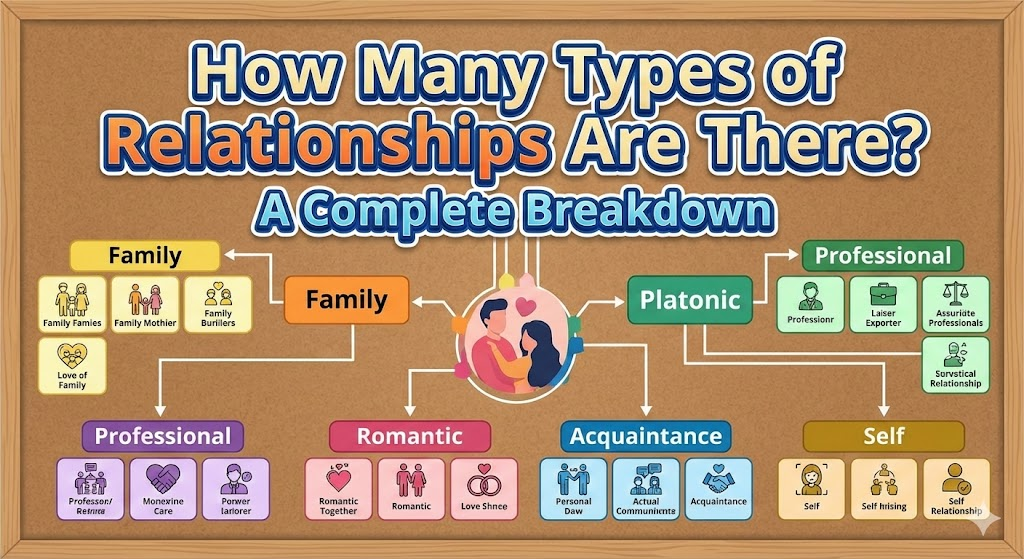
How Many Types of Relationships Are There? A Complete Breakdown
The question of how many types of relationships exist doesn’t have a simple numerical answer. Human relationships span a vast spectrum, from casual acquaintances to deep romantic partnerships, from family bonds to professional connections. Research in psychology and sociology has identified numerous relationship categories, each with unique characteristics, dynamics, and purposes in our lives.
In this comprehensive guide, we’ll explore the major types of relationships that shape human experience, examining what makes each type unique and how these connections contribute to our overall wellbeing and personal development.
Romantic Relationships: Understanding Different Types of Intimate Partnerships
When people ask about different types of relationships, romantic partnerships often come to mind first. However, romantic relationships themselves encompass multiple forms and structures that vary significantly in commitment level, exclusivity, and relationship dynamics.
Monogamous Romantic Relationships
Traditional monogamous relationships remain the most common form of romantic partnership in many cultures. These relationships involve two people committed exclusively to each other, both emotionally and physically. Within monogamous relationships, couples may be dating casually, in committed long-term partnerships, engaged, or married. The defining characteristic is the mutual agreement of exclusivity and the expectation that romantic and sexual intimacy remains between two people.
Long-term committed relationships and marriages represent the deepest level of monogamous connection, where partners often share lives, resources, and future plans. These relationships typically involve higher levels of interdependence, shared responsibility, and long-term commitment compared to casual dating relationships.
Polyamorous and Non-Monogamous Relationships
Understanding different types of non-monogamous relationships has become increasingly important as relationship structures diversify. Polyamorous relationships involve multiple romantic partners with the knowledge and consent of everyone involved. Unlike infidelity, ethical non-monogamy is based on honesty, communication, and agreed-upon relationship boundaries.
Open relationships represent another form where partners maintain a primary romantic relationship while agreeing that each person can pursue sexual or romantic connections with others. The specific rules and boundaries vary widely between couples and require extensive communication to navigate successfully.
Casual Dating and Situationships
Not all romantic connections involve deep commitment. Casual dating relationships exist when people enjoy each other’s company romantically without the expectation of exclusivity or long-term commitment. These relationships can be fulfilling for people who aren’t ready for serious partnerships or who prefer maintaining independence while still enjoying romantic connection.
The modern dating landscape has also given rise to “situationships,” a term describing undefined romantic connections that exist in the gray area between casual dating and committed relationships. These ambiguous relationship types can be satisfying for some but challenging for others who crave clearer definitions and expectations.
Platonic Relationships: The Many Types of Friendships
Friendships constitute some of the most important types of relationships in human life, yet they’re often undervalued compared to romantic partnerships. Understanding the different types of friendships helps us appreciate the varied roles friends play in our emotional support systems.
Close Friendships and Best Friends
Deep platonic friendships provide emotional intimacy, support, and companionship without romantic or sexual elements. Best friends often know each other’s deepest thoughts, provide crucial emotional support during difficult times, and celebrate life’s joys together. These relationships can last decades and rival romantic partnerships in their depth and significance.
Research consistently shows that having close friendships contributes significantly to mental health, longevity, and overall life satisfaction. Quality friendships provide a sense of belonging, reduce stress, and offer perspectives that help us grow as individuals.
Casual Friendships and Acquaintances
Not all friendships involve deep emotional connection. Casual friends are people we enjoy spending time with in specific contexts, such as work colleagues we chat with during lunch breaks, neighbors we greet warmly, or fellow hobbyists we see at club meetings. These lighter connections still contribute to our sense of community and social wellbeing.
Acquaintances represent the outermost circle of our social networks. These are people we recognize and interact with occasionally but don’t have deeper personal knowledge of or connection with. While these relationships might seem superficial, they contribute to our sense of belonging in our communities and can sometimes develop into closer friendships.
Online Friendships and Digital Relationships
The digital age has created new types of friendship dynamics. Online friendships formed through social media, gaming communities, or shared interest forums can be surprisingly meaningful. Some people maintain close online friendships for years, providing mutual support and genuine connection despite never meeting in person.
These digital relationship types challenge traditional notions of what constitutes a “real” friendship and demonstrate that genuine human connection can transcend physical proximity.
Family Relationships: Understanding Different Types of Kinship Bonds
Family relationships represent some of the most complex and influential connections in our lives. The different types of family relationships we experience shape our early development, sense of identity, and often continue impacting us throughout our entire lives.
Parent-Child Relationships
The relationship between parents and children is foundational to human development. These bonds evolve significantly over time, transitioning from complete dependence in infancy to increasing autonomy in adolescence and, ideally, to mutual respect and adult friendship later in life. Parent-child relationships can be biological, adoptive, or formed through step-parenting, each with unique dynamics and challenges.
Understanding healthy parent-child relationship dynamics helps families navigate the natural tensions that arise as children grow and seek independence while maintaining important emotional connections.
Sibling Relationships
Sibling bonds are among the longest-lasting relationships most people will experience. Brothers and sisters share unique connections formed through shared family experiences, histories, and often similar genetic makeup and upbringing. Sibling relationships can range from intensely close and supportive to distant or conflicted, and they often fluctuate throughout different life stages.
These relationships teach important lessons about sharing, conflict resolution, loyalty, and navigating complex emotions, providing a training ground for future relationships outside the family.
Extended Family and Chosen Family
Relationships with grandparents, aunts, uncles, cousins, and other extended family members add richness and complexity to family dynamics. These connections provide additional support systems, different perspectives, and often serve as important sources of family history and cultural identity.
The concept of “chosen family” has gained recognition as a valid and important relationship type, particularly in communities where biological family relationships are strained or absent. Chosen family consists of close friends and non-relatives who fulfill the roles typically associated with family, providing unconditional support, belonging, and deep connection.
Professional Relationships: Types of Work Connections
The workplace generates numerous types of professional relationships that significantly impact our daily lives, career success, and overall satisfaction. Understanding different types of professional relationships helps navigate workplace dynamics more effectively.
Colleague and Coworker Relationships
Relationships with coworkers can range from purely professional to genuine friendships that extend beyond the workplace. Positive colleague relationships contribute to job satisfaction, productivity, and a supportive work environment. These connections help us feel less isolated at work and can provide important professional support and collaboration opportunities.
However, workplace friendships require careful navigation to maintain appropriate professional boundaries while still enjoying genuine connection with the people we spend significant time with daily.
Mentor-Mentee Relationships
Mentorship relationships involve more experienced professionals guiding less experienced individuals in their career development. These relationships can be formal or informal and provide invaluable benefits including knowledge transfer, career guidance, networking opportunities, and professional growth. Effective mentorship relationships are characterized by mutual respect, clear communication, and genuine investment in the mentee’s success.
Supervisor-Employee Relationships
The relationship between supervisors and their direct reports represents a unique professional dynamic involving power differential, evaluation, and leadership. Healthy supervisor-employee relationships balance appropriate authority with respect, clear communication, and support for employee development. These relationships significantly impact job satisfaction, performance, and career advancement.
Community and Social Relationships
Beyond our closest connections, we participate in various community and social relationships that contribute to our sense of belonging and social identity.
Neighborly Relationships
Relationships with neighbors can significantly impact our daily comfort and sense of safety in our living environment. Good neighbor relationships involve mutual respect, appropriate boundaries, and friendly interaction. These connections might include casual conversations, helping each other with occasional tasks, or simply maintaining a pleasant atmosphere in shared spaces.
Interest-Based Community Connections
Relationships formed through shared interests, hobbies, religious communities, or volunteer organizations create important social bonds. These community relationship types connect people through common values or activities, providing social support, meaningful engagement, and opportunities for personal growth.
Participation in community groups helps combat social isolation and connects individuals to something larger than themselves, contributing to purpose and wellbeing.
Parasocial Relationships: Modern One-Sided Connections
The modern media landscape has created a unique relationship type that previous generations didn’t experience to the same degree. Parasocial relationships occur when individuals develop one-sided emotional connections with media figures, celebrities, influencers, or fictional characters.
While these relationships lack reciprocity, they can still feel meaningful to the individual experiencing them. People may feel they “know” celebrities they follow on social media or characters from shows they watch regularly. Understanding parasocial relationships helps explain modern fan culture and the emotional impact of media consumption.
Therapeutic and Helping Relationships
Professional helping relationships represent another distinct category. Relationships with therapists, counselors, doctors, coaches, or other helping professionals involve specific boundaries, ethical guidelines, and purposes. These connections are characterized by one person seeking help and another providing professional support or expertise.
While these relationships may feel personal and involve vulnerability and trust, they maintain professional boundaries that distinguish them from personal friendships or other relationship types.
Understanding the Full Spectrum of Human Relationships
So how many types of relationships are there? The answer is that human relationships exist on multiple spectrums rather than in neat, countable categories. We’ve explored romantic relationships ranging from casual to committed, monogamous to polyamorous. We’ve examined the many types of friendships from close confidants to casual acquaintances. We’ve considered family relationships by blood and by choice, professional connections across various workplace dynamics, and community bonds that tie us to broader social groups.
Each type of relationship serves different purposes in our lives. Romantic partnerships provide intimacy and companionship. Friendships offer emotional support and shared joy. Family relationships connect us to our origins and provide unconditional belonging. Professional relationships support our career growth and daily work satisfaction. Community connections give us a sense of place and purpose within larger social structures.
The most important takeaway is that all these relationship types matter. A fulfilling life typically includes a diverse portfolio of relationships across multiple categories. Understanding the different types of relationships helps us recognize what we need from our connections, communicate more effectively with the people in our lives, and build the strong social support systems that contribute to happiness, resilience, and personal growth.
Rather than asking how many types of relationships exist, perhaps the better question is: are you cultivating healthy relationships across the different areas of your life? Are you giving appropriate attention and energy to the various connections that matter to you? Understanding relationship diversity empowers us to be more intentional about building and maintaining the varied connections that enrich human experience.