Is Divorce a Good Solution? Questions to Ask Before You Decide
If you’re reading this article, you’re likely facing one of the most difficult decisions of your life. The question “is divorce a good solution?” doesn’t have a universal answer, because every marriage, every person, and every situation is unique. What works as a solution for one couple may not be appropriate for another. This guide will help you think through the critical questions, understand the potential outcomes, and gain the psychological insight you need to make an informed decision about your future.
Deciding whether divorce is the right path forward requires honest self-reflection, careful consideration of multiple factors, and often professional guidance. This is not a decision to make impulsively or in the heat of an argument. It’s also not a decision to delay indefinitely out of fear while remaining in a damaging situation. The key is finding clarity about what divorce would actually solve, what it wouldn’t solve, and whether there are alternatives worth exploring first.
Understanding When Divorce Might Be a Good Solution
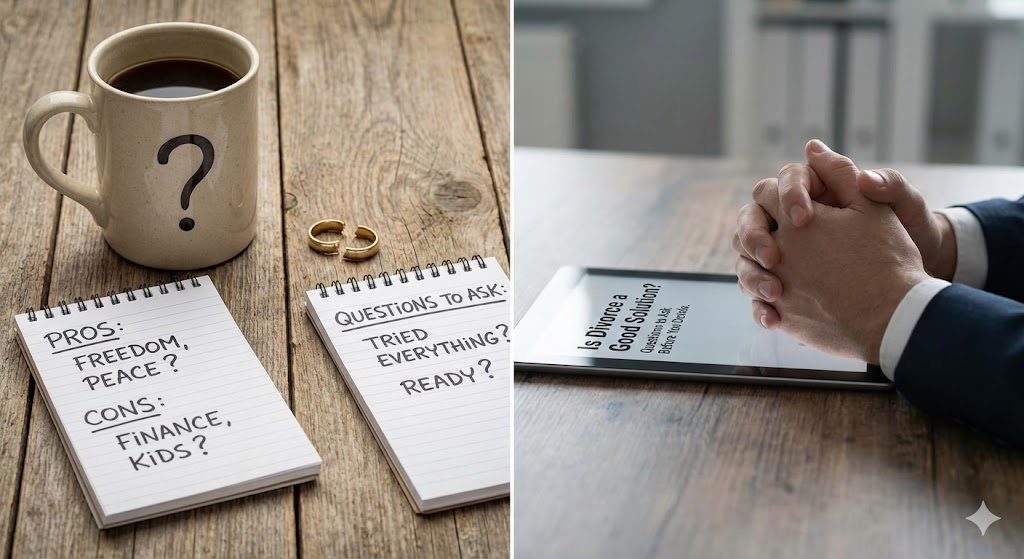
Before exploring whether divorce is a good solution for your specific situation, it’s important to understand the circumstances where divorce is often the healthiest choice. Research in marriage and family therapy has identified several situations where ending a marriage typically leads to better outcomes for everyone involved.
When Safety Is at Risk
If you are experiencing domestic violence, abuse, or feel unsafe in your marriage, divorce is not just a good solution—it may be necessary for your survival and wellbeing. Abuse can be physical, emotional, sexual, or financial. No amount of couples counseling can fix an abusive relationship, and staying is not safer than leaving. If this describes your situation, please reach out to domestic violence resources in your area or call the National Domestic Violence Hotline at 1-800-799-7233.
Safety concerns represent clear situations where asking “is divorce a good solution” has a definitive answer. Your physical and emotional safety, and that of your children, takes precedence over preserving a marriage.
When Fundamental Values Are Irreparably Incompatible
Sometimes couples discover that their core values, life goals, or visions for the future are fundamentally incompatible. Perhaps one partner desperately wants children while the other is certain they don’t. Maybe religious or philosophical differences that seemed minor early in the relationship have become insurmountable. When these fundamental incompatibilities exist and neither partner is willing or able to compromise, divorce may be the good solution that allows both people to pursue lives aligned with their authentic values.
These aren’t situations about who’s right or wrong. They’re about recognizing that two good people can simply be wrong for each other in ways that cannot be reconciled.
When Repeated Infidelity or Broken Trust Exists
While some marriages do recover from infidelity, repeated betrayals or a complete unwillingness to rebuild trust make divorce a reasonable solution. If your partner has cheated multiple times, shows no genuine remorse, refuses to take responsibility, or continues deceptive behavior, staying in the marriage may cause more harm than leaving.
Trust is foundational to healthy relationships. When it’s repeatedly violated without genuine efforts at repair, divorce allows you to stop living in a constant state of anxiety, suspicion, and emotional pain.
When Active Addiction Controls the Relationship
When a spouse struggles with addiction to substances, gambling, or other destructive behaviors and refuses treatment or repeatedly relapses without taking recovery seriously, divorce can be a good solution that protects you and your family from the chaos addiction creates. This is especially true when addiction leads to financial devastation, emotional abuse, or puts children at risk.
It’s important to note that choosing divorce doesn’t mean you don’t love your spouse or wish them well. It means you’re recognizing that you cannot save someone who won’t save themselves, and that protecting your own wellbeing is necessary and valid.
Critical Questions to Ask Before Deciding If Divorce Is a Good Solution
For those not facing immediate safety concerns or the clear-cut situations described above, determining whether divorce is a good solution requires working through difficult questions. These questions will help you gain clarity about your motivations, expectations, and realistic outcomes.
Have You Genuinely Tried to Fix the Marriage?
Ask yourself: Have we tried marriage counseling with a qualified therapist? Have we read books, attended workshops, or made sustained efforts to improve our relationship? Have I communicated my needs clearly and given my partner a fair opportunity to respond?
Many people wonder if divorce is a good solution when they haven’t actually attempted the solutions that could potentially save their marriage. This isn’t about staying in a miserable marriage indefinitely while trying everything possible. Rather, it’s about ensuring you can look back without regret, knowing you made genuine efforts before making a permanent decision.
Effective marriage counseling with the right therapist can help couples develop better communication patterns, understand underlying issues, and either repair the relationship or gain clarity that divorce is indeed the right path. If you haven’t tried professional help, or if you tried once briefly and gave up, it’s worth considering whether giving it a more sustained effort might change your perspective.
However, if you’ve spent years in therapy making no progress, or if your partner refuses to participate in good faith, these attempts themselves provide important information about whether the marriage is salvageable.
What Specifically Will Divorce Solve?
This is perhaps the most important question when evaluating if divorce is a good solution for your situation. Write down specifically what you believe divorce will solve. Be concrete and honest.
Divorce will solve problems that are specifically caused by your marriage or spouse. It will end constant conflict with a particular person, free you from an unfaithful partner, remove you from a toxic dynamic, or allow you to pursue life goals your marriage prevents. These are legitimate problems that divorce directly addresses.
However, divorce won’t solve problems that are internal to you or that exist independent of your marriage. It won’t automatically make you happy, heal your childhood wounds, fix your relationship with your children, eliminate financial stress, or resolve your own personal struggles with anxiety, depression, or self-esteem. Understanding this distinction is crucial.
Many people contemplating divorce are really seeking escape from general life dissatisfaction, and they attribute all their unhappiness to their marriage. While an unhappy marriage certainly contributes to overall unhappiness, divorce will only solve the portion of your dissatisfaction that is specifically marriage-related. Be honest about what percentage that truly represents.
Are You Hoping Divorce Will Make Your Spouse Change?
Some people unconsciously view divorce as a wake-up call that will finally make their spouse realize what they’re losing and transform into the partner they’ve always wanted. If you’re secretly hoping that filing for divorce will shock your spouse into becoming more attentive, appreciative, or committed, you’re not actually ready to divorce. You’re still trying to change your spouse, just using divorce as a tool.
Divorce is a good solution only when you’ve accepted your spouse as they are and decided you don’t want to be married to that person. It’s not a manipulation tactic or an extreme form of couples therapy.
What Are You Willing to Lose?
Consider carefully: What will divorce cost you beyond the marriage itself? How will it affect your children? Your finances? Your daily life? Your extended family relationships? Your social circle? Your living situation?
Divorce involves real losses beyond the end of the marriage. Being honest about what you’ll lose and whether you’re prepared to accept those losses is essential. This isn’t about staying in an unhappy marriage due to fear of loss—it’s about making an informed decision with your eyes open.
For many people, divorce is still a good solution even with significant losses, because the gain in peace, authenticity, and freedom from a destructive relationship outweighs what they’ll lose. But you need to count the cost honestly rather than minimizing it or assuming everything will magically work out.
Are Your Children a Factor in Your Decision?
The question “should we stay together for the kids?” is more nuanced than common wisdom suggests. Research shows that children generally do better when parents divorce than when they remain in high-conflict marriages where they’re exposed to constant tension, fighting, or emotional coldness. However, children from low-conflict divorces, where parents divorce due to boredom or unhappiness rather than serious problems, often struggle more than those whose parents stayed together.
If you have children, divorce may be a good solution when staying married means exposing them to unhealthy relationship models, excessive conflict, or living in a home filled with resentment and hostility. Teaching children that it’s acceptable to leave unhealthy situations is valuable. However, if your marriage is simply unfulfilling rather than actively harmful, the calculation changes.
Children of divorce face real challenges: divided holidays, transitions between homes, potentially reduced time with one parent, and the emotional impact of their family changing. These impacts should be weighed seriously, not dismissed with phrases like “kids are resilient” or “they’ll be fine.” They may well be fine, especially if you co-parent effectively, but this requires thoughtful consideration.
The Psychological Reality of Divorce as a Solution
Understanding the psychological research on divorce outcomes helps answer whether divorce is a good solution with more nuance and realism. The data reveals important patterns about who benefits from divorce and who struggles.
Who Benefits Most from Divorce?
Research consistently shows that people in high-conflict marriages, abusive relationships, or situations involving addiction or infidelity generally experience significant improvements in wellbeing after divorce. Their mental health improves, stress levels decrease, and they report greater life satisfaction once the divorce is finalized and they’ve adjusted to their new life.
People with strong social support systems, good coping skills, financial resources, and the ability to maintain civil co-parenting relationships also tend to navigate divorce successfully. For these individuals, divorce is often a good solution that opens doors to healthier relationships and more authentic lives.
Who Struggles After Divorce?
Conversely, people who divorce from low-conflict marriages, who have limited social support, who face significant financial hardship, or who enter into protracted, hostile custody battles often find that divorce creates as many problems as it solves. If you’re contemplating divorce primarily because you’re bored, feeling unfulfilled, or wondering if there’s something better out there, research suggests you may not experience the happiness boost you’re anticipating.
Additionally, people who haven’t addressed their own personal issues often carry those same issues into post-divorce life. If you struggle with communication, emotional regulation, trust issues, or unrealistic expectations, these patterns will follow you regardless of your marital status.
The Timeline of Divorce Recovery
It’s important to understand that even when divorce is absolutely the right solution, it’s rarely easy in the short term. Most people experience a difficult adjustment period of one to three years following divorce. During this time, you may feel regret, loneliness, financial stress, and uncertainty even if you initiated the divorce and know it was necessary.
This doesn’t mean divorce was the wrong choice—it means that major life transitions are inherently challenging. Having realistic expectations about this adjustment period helps you persist through the difficult phases rather than interpreting temporary discomfort as evidence you made the wrong decision.
Alternatives to Consider Before Deciding Divorce Is the Solution
Before concluding that divorce is the good solution for your situation, consider whether these alternatives might address your concerns without ending the marriage.
Trial Separation
A structured trial separation with clear boundaries and timeframes can provide perspective. During separation, you can experience what life would be like divorced while maintaining the option to reconcile. This allows you to test whether the problems are truly unsolvable or if distance provides clarity and motivation for change.
For a trial separation to be productive, establish clear agreements about finances, contact with children, whether you’ll date others, and what you each hope to learn during this time. Also set a definite timeframe for reevaluation.
Intensive Therapy or Marriage Retreats
If weekly therapy hasn’t produced results, consider intensive couples therapy formats like weekend retreats or week-long therapeutic intensives. These immersive experiences can break through stuck patterns more effectively than traditional once-weekly sessions.
Programs like the Gottman Institute workshops or Emotionally Focused Therapy intensives have strong research support for helping couples in distress. These represent significant investments of time and money, but they’re far less costly than divorce.
Discernment Counseling
Discernment counseling is specifically designed for couples where one person is leaning toward divorce and the other wants to save the marriage. Rather than trying to fix the relationship, discernment counseling helps you gain clarity about whether divorce is the right path, whether to try to repair the marriage, or whether separation is needed first.
This brief intervention, typically lasting one to five sessions, can help you feel more confident about your decision either way.
Acceptance of an Imperfect Marriage
Sometimes the alternative to divorce isn’t fixing every problem—it’s accepting that your marriage will never be perfect while recognizing its value and finding ways to meet some needs outside the marriage through friendships, hobbies, or personal pursuits.
This isn’t about resigning yourself to misery. Rather, it’s about honestly assessing whether your marriage provides enough of what you need, even if it’s imperfect. Many long-term marriages involve periods of discontentment followed by reconnection. If the relationship is fundamentally safe and respectful, accepting imperfection might be viable.
Making the Decision: Is Divorce a Good Solution for You?
After working through these questions and considerations, you may have greater clarity about whether divorce is a good solution for your specific situation. Here’s how to move toward a decision.
Trust Your Gut While Being Honest About Your Motivations
Deep down, most people know whether their marriage is truly over. If you’ve done the work of honest reflection, addressed your own issues, made genuine attempts to repair the relationship, and still feel convinced that staying married will prevent you from living authentically or will cause ongoing harm, trust that knowing.
However, also be brutally honest about whether you’re running from problems that will follow you, seeking a fantasy of perfect happiness, or avoiding necessary personal growth work.
Seek Professional Guidance
Individual therapy can be invaluable when making this decision. A good therapist won’t tell you whether to divorce, but will help you clarify your thoughts, understand your patterns, and make a decision aligned with your values and long-term wellbeing.
Additionally, consulting with a divorce attorney doesn’t commit you to divorce, but it does provide crucial information about what divorce would realistically involve in your situation, financially and logistically. Knowledge reduces fear and allows for more rational decision-making.
Give Yourself Permission Either Way
Whether you ultimately decide divorce is the good solution for you or choose to continue working on your marriage, give yourself permission to make that choice without shame. Divorce is not a moral failure—sometimes it’s the healthiest, bravest choice available. Similarly, choosing to stay and work on an imperfect marriage is not weak or settling—it can be a mature acknowledgment of reality and commitment to growth.
What matters is that you make a conscious, informed decision rather than defaulting to inertia or acting impulsively from a place of anger or hurt.
Final Thoughts: Is Divorce a Good Solution?
So, is divorce a good solution? The answer is deeply personal and situational. Divorce is a good solution when staying married causes ongoing harm, prevents you from living authentically, exposes you or your children to abuse or addiction, or keeps you bound to someone who repeatedly violates trust and refuses to change. Divorce is a good solution when you’ve genuinely tried alternatives, when you’ve done your own personal work, and when you can honestly say that the marriage itself, not just general life dissatisfaction, is the problem you’re solving.
Divorce may not be the best solution if you haven’t truly tried to fix the relationship, if you’re seeking escape from problems that are internal to you, if you’re in a low-conflict marriage and contemplating divorce primarily from boredom or the hope that someone better is out there, or if you haven’t addressed your own contribution to marital problems.
The decision to divorce is one of the most consequential you’ll make in your lifetime. It deserves careful thought, honest self-reflection, professional guidance, and the willingness to sit with uncertainty while you work toward clarity. There’s no shame in taking time to make this decision thoughtfully rather than rushing into it or delaying it indefinitely.
Whatever you decide, know that you deserve happiness, safety, and authentic connection in your life. Sometimes that means fighting for your marriage. Sometimes it means having the courage to end it. Only you can determine which path represents the good solution for your unique situation. Trust yourself to figure it out, seek support as you do so, and then move forward with confidence in your decision.